RESEARCH OPERATIONS · FALL 2026

The research platform

The website and dashboard behind our scheduling study.

ROLE

Sole designer and builder. Created for our four-person research team.
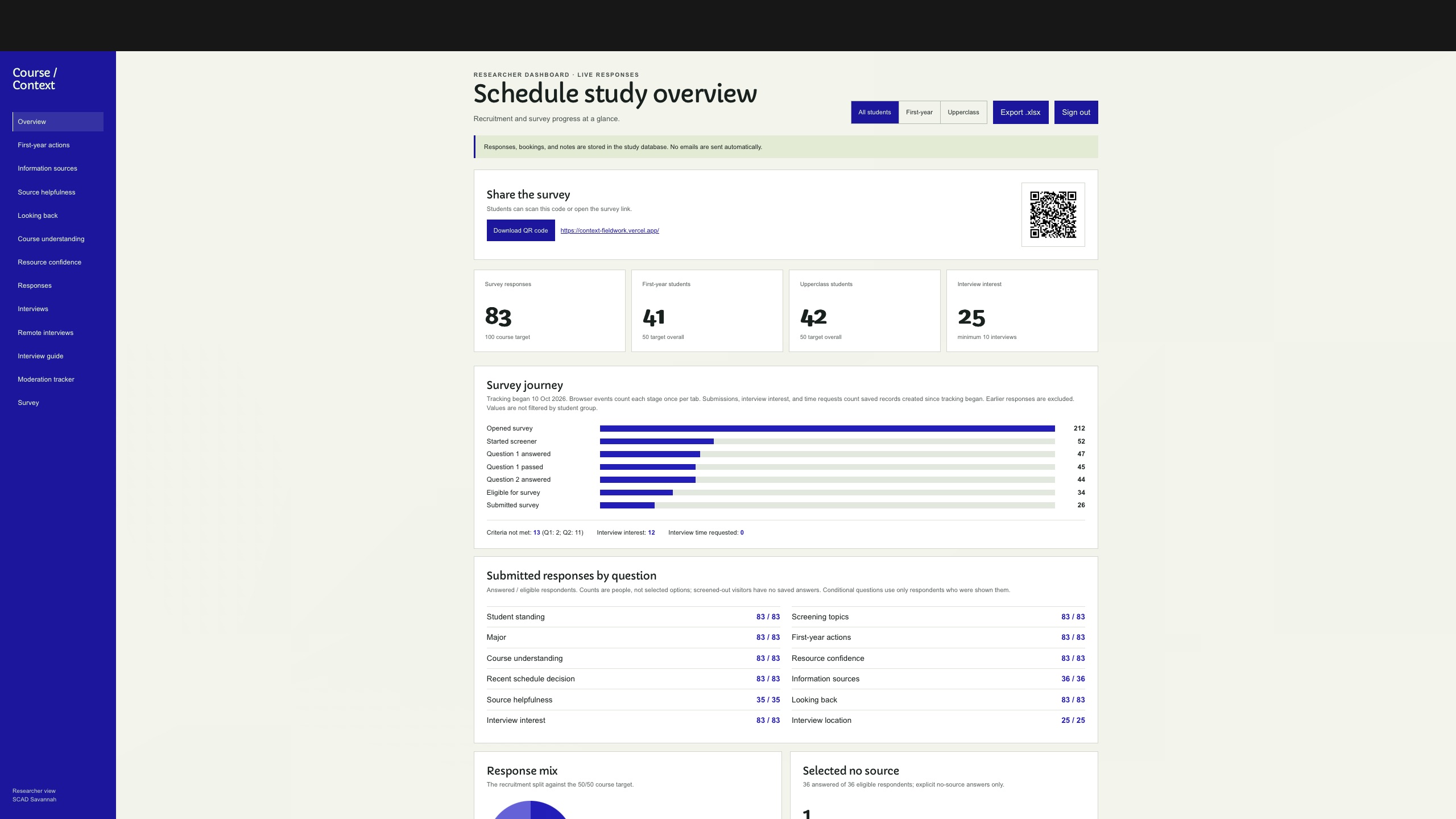
The research platform case study

FROM RESEARCH PLAN TO PARTICIPANT FLOW

I turned our screener, survey, and interview invitation into one path. Conditional questions kept students focused on the experiences that applied to them.

01 / SCREEN

Check eligibility.

Student standing + scheduling experience
Eligible

Continue to the survey

Not eligible

Thank the student and exit

02 / SURVEY

Ask what applies.

Major → first-year actions → course understanding → confidence

Made a recent scheduling decision?

Yes

Sources used + ratings for selected sources

No / unsure

Skip sources and ratings

Both paths → what students wish they had known
03 / OPTIONAL INTERVIEW

Make the handoff clear.

Decline → thank-you · Opt in → student email

Is a researcher with the student now?

Researcher present

Show the participant number

Completing alone

Request a time, or leave an email for follow-up

DESIGNING FOR INTERPRETATION

A skipped question is different from a negative answer. I made response coverage and cohort filters visible so our team could interpret each chart in context.

ANSWERED / ELIGIBLE

Keep the denominator visible.

Source questions appear after a recent scheduling decision. Source ratings apply only to sources a student selected.

COHORT COMPARISON

Keep the perspectives distinct.

First-year and upperclass filters let us read current experiences alongside hindsight.

COLLECTING ONLY WHAT THE NEXT STEP NEEDS

Interview contact details weren’t needed to analyze the survey. I kept them separate from survey answers and requested a student email only after interview opt-in.

SURVEY ANALYSIS

Understand the experience.

Cohort, major, scheduling actions, information sources, and hindsight.

INTERVIEW FOLLOW-UP

Arrange the next conversation.

Opt-in contact details, availability, and session coordination.

KEEPING FIELDWORK TOGETHER

I brought interview requests, moderator assignments, question-level notes, and exports into the dashboard so our team could coordinate the study in one place.

DURING FIELDWORK

Make sessions easier to follow.

  1. Interview requests + availability
  2. Moderator + note taker
  3. Guide + question-level notes
AFTER FIELDWORK

Carry the evidence into analysis.

  1. Completed-session tracking
  2. Survey + interview exports
  3. Contact details separate from survey answers

USED IN THE STUDY

Our team used the platform to collect responses, compare cohorts, and coordinate interviews.

The final study included 101 qualified survey responses and 12 completed interviews.

The dashboard screenshot shows 83 responses during fieldwork on November 3, 2026.

RESEARCH OPERATIONSINTERACTION DESIGNFIELDWORK
Next case studyMaking the Cut →