Franklin's
The experience starts before you walk in.
RESEARCH_
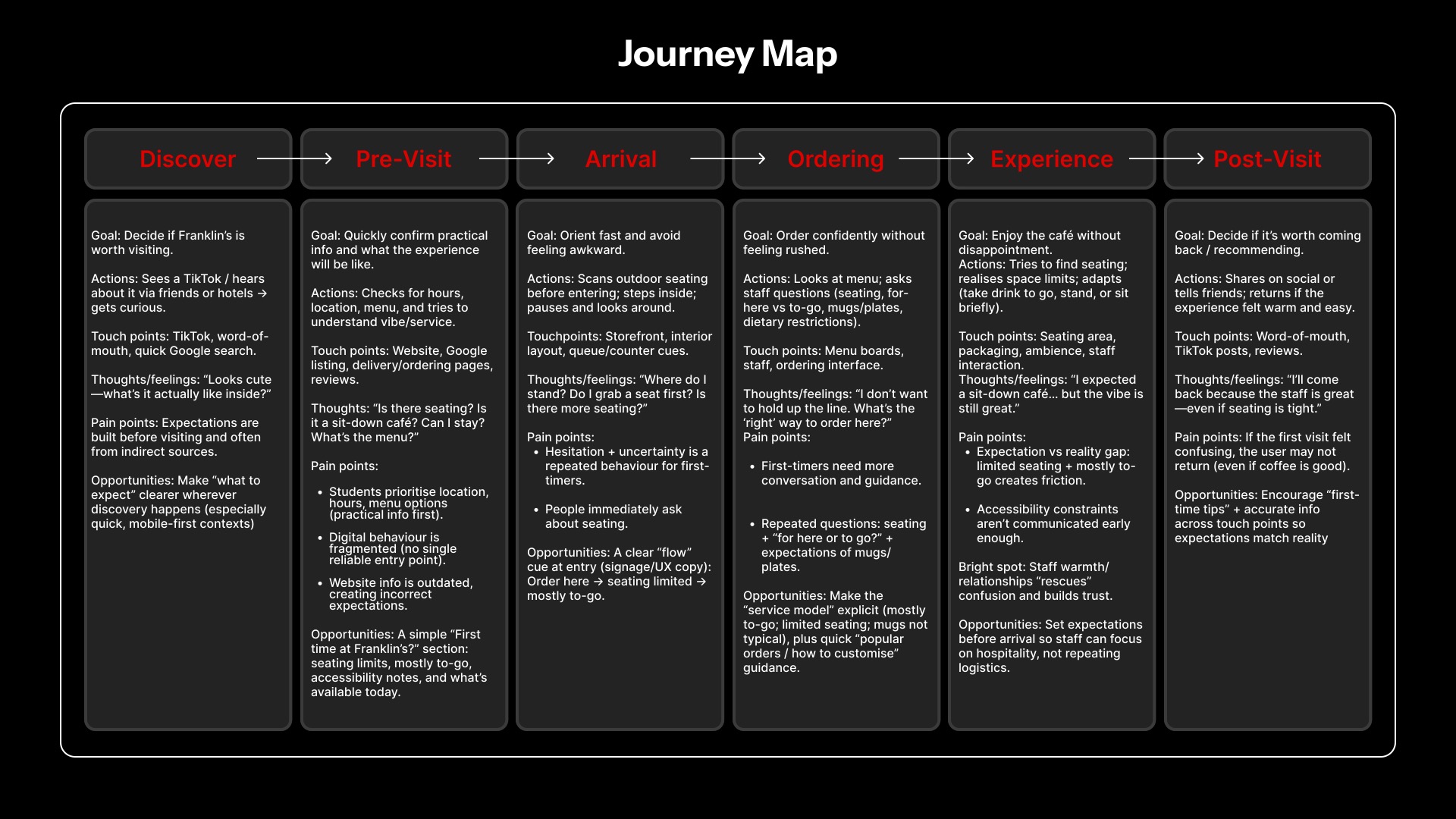
We used contextual inquiry as our primary method — short in-context conversations and direct observation at the café, structured to fit around a busy service environment without disrupting customers or staff. I led the team in conducting both barista and customer interviews, and ran a survey with SCAD students to understand pre-visit behaviour. The pattern that emerged quickly: most friction started before anyone walked through the door. Customers discovered Franklin's via TikTok or word of mouth, searched online for practical information (hours, location, seating, menu), and arrived having already formed expectations the café couldn't always meet. The website was outdated, the service model wasn't communicated, and the warmth that defined the in-store experience had no digital equivalent.
IDEATION_
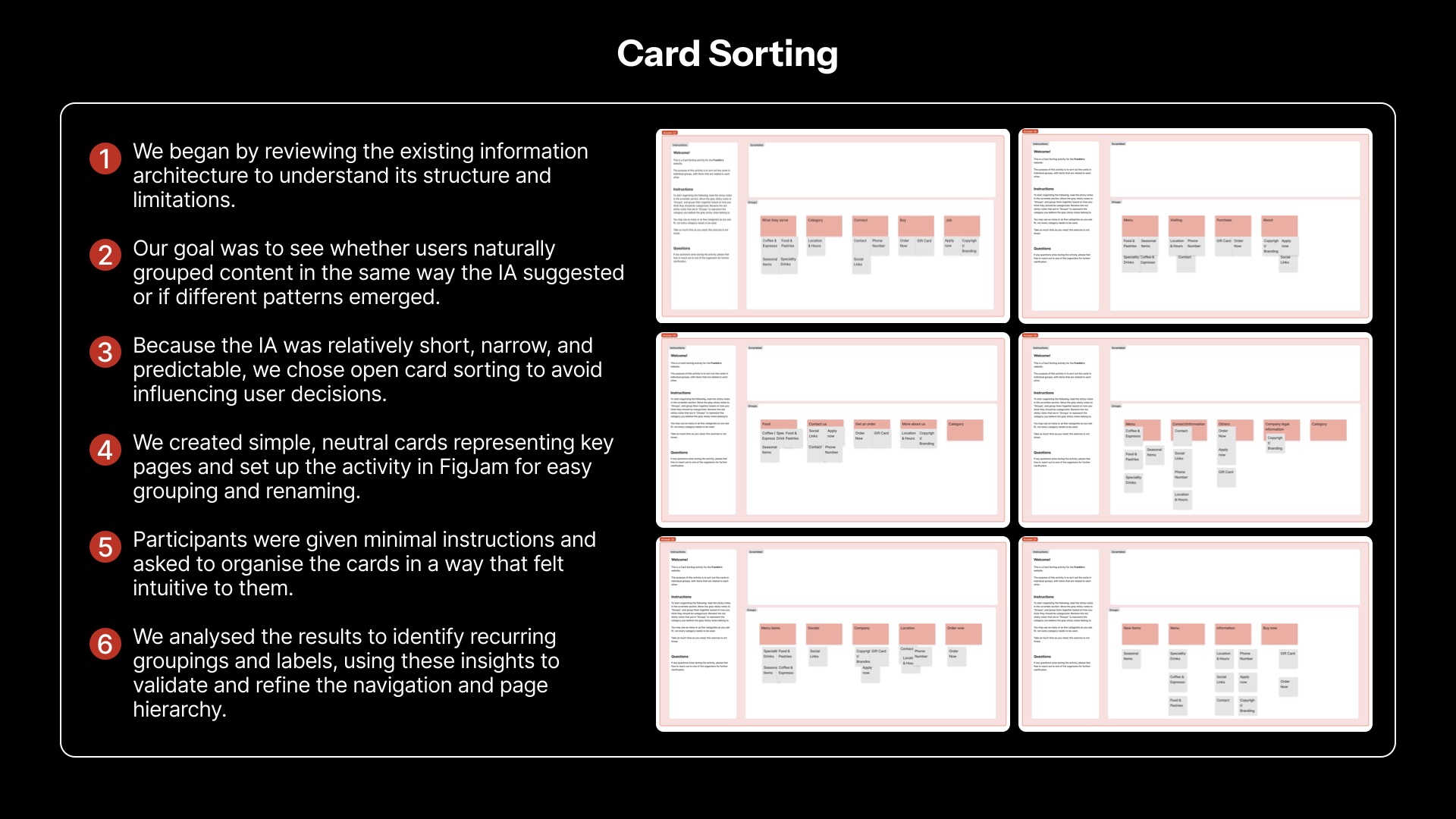
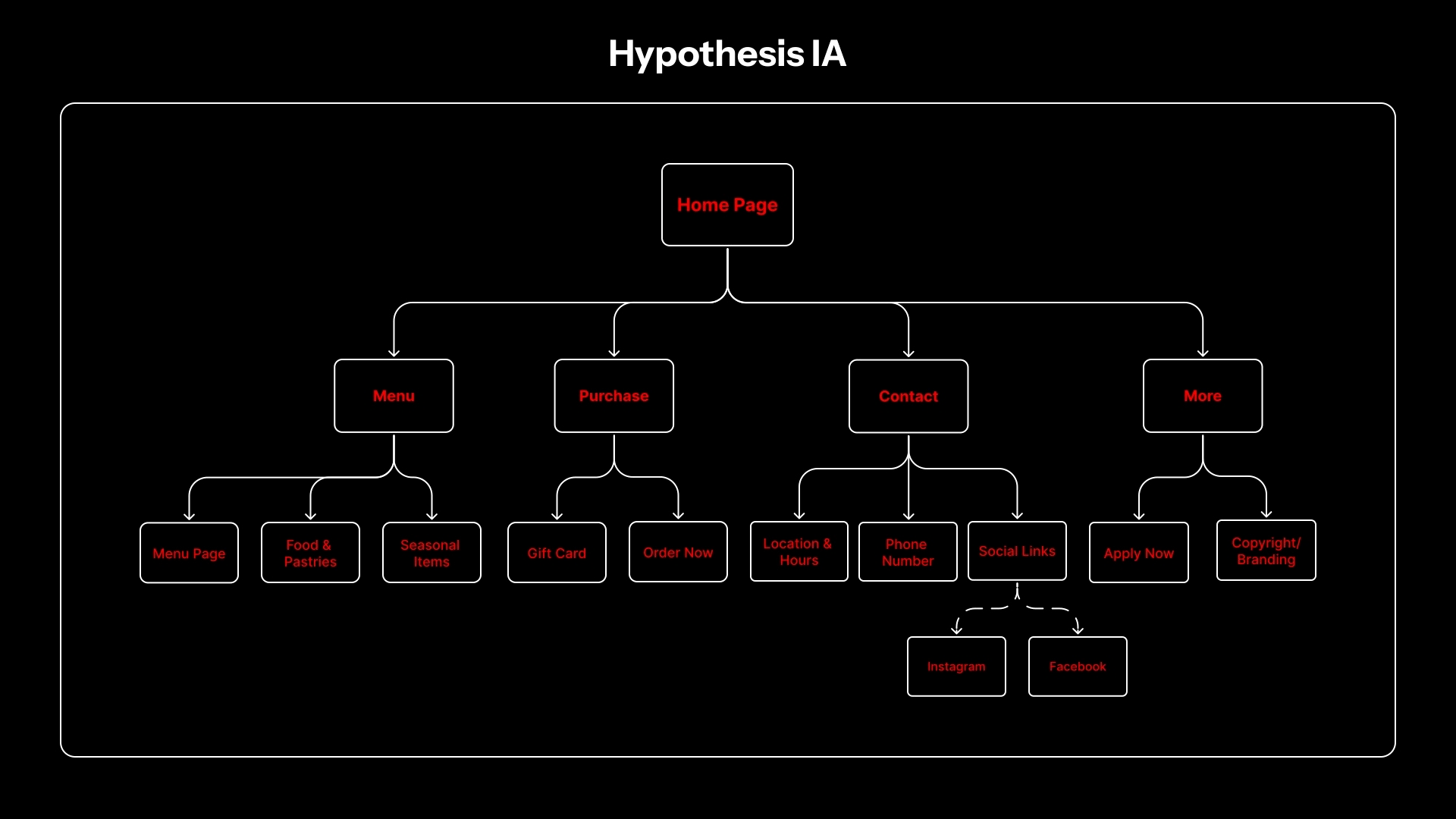
I led synthesis across a journey map, aggregate empathy map, and business model canvas before moving the team into IA. Card sorting on FigJam — open format, to avoid influencing participant groupings — revealed that users expected task-based navigation, not business categories. They naturally organised content into four buckets: Menu, Order, About, and Contact. That became the backbone of the redesigned IA. The opportunity statement focused on three areas: first-time customer support, clearer pre-visit expectations, and aligning the digital experience with Franklin's warm, human-centred brand.
KEY DECISIONS_
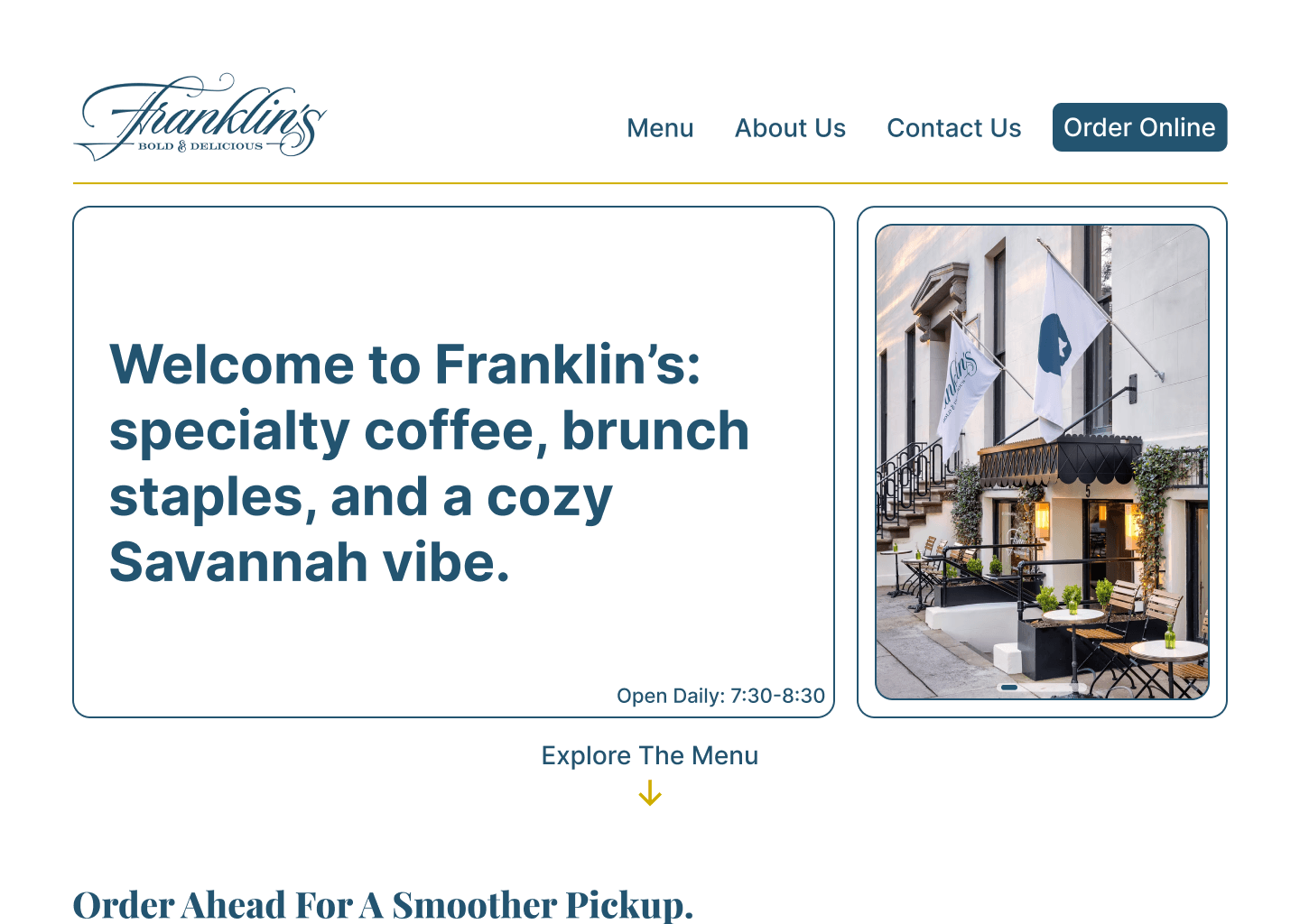
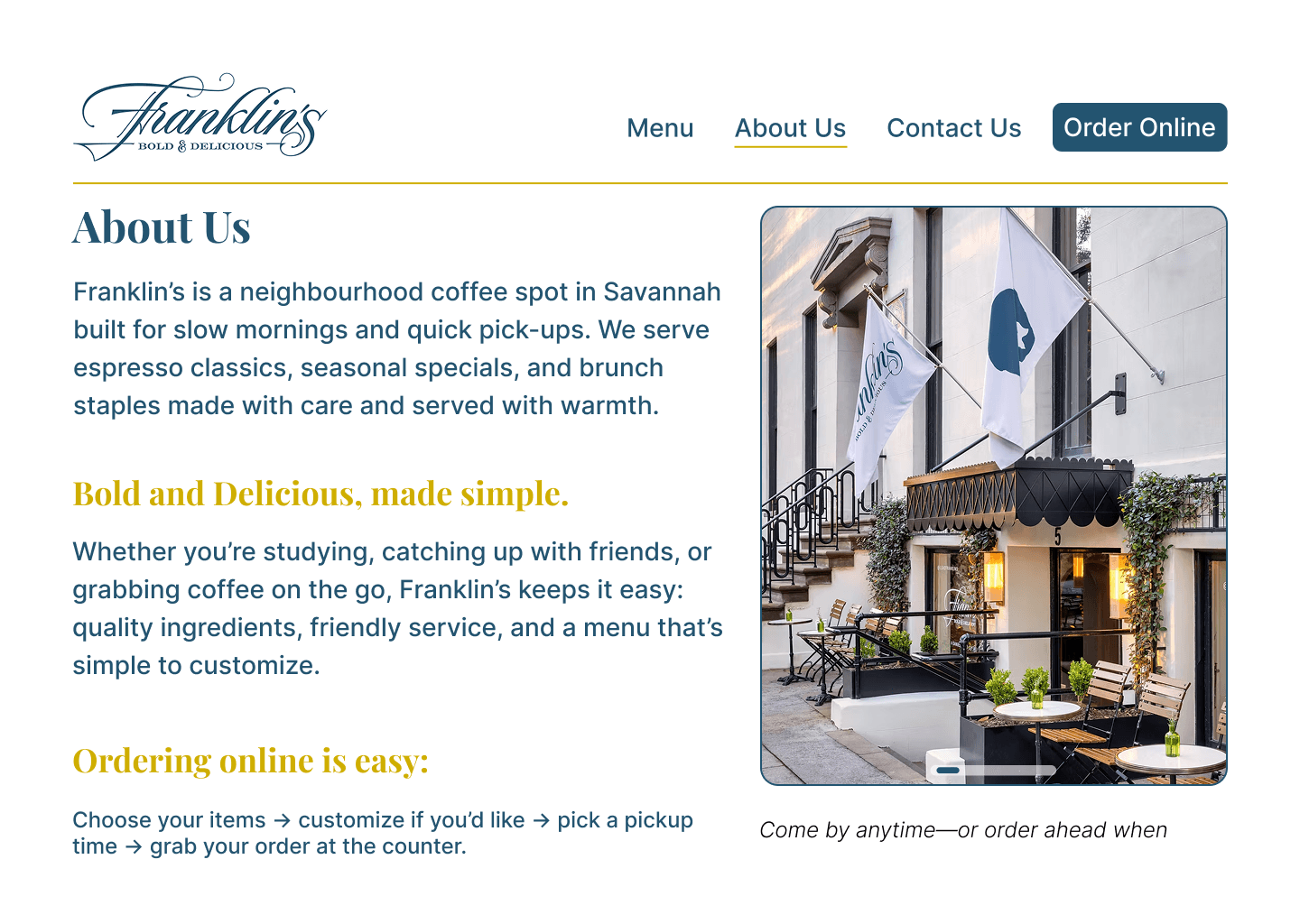
Every design move was traced directly back to a research finding. Staff warmth was preserved by keeping the tone welcoming throughout. The homepage was restructured to surface practical expectations earlier — seating limitations, service style, hours — rather than leading with atmosphere. Navigation was reduced to four task-based items. The order flow was redesigned as a clear sequence: item selection, cart, payment, confirmation, with explicit progress cues to reduce the hesitation we'd observed in first-time users. The About page was repositioned as a pre-visit resource, not a brand story.
USABILITY TESTING_
We tested whether users could complete a specific order — a small, medium roast cappuccino with skim milk and vanilla syrup — smoothly from discovery to checkout. Users completed the task successfully with no major usability breakdowns. The flow felt clear and intuitive. Constraints were prototype-level: users couldn't type into text fields and only one product path was prototyped. Because the core flow tested well, we made the call not to iterate — the design held.
SOLUTION_
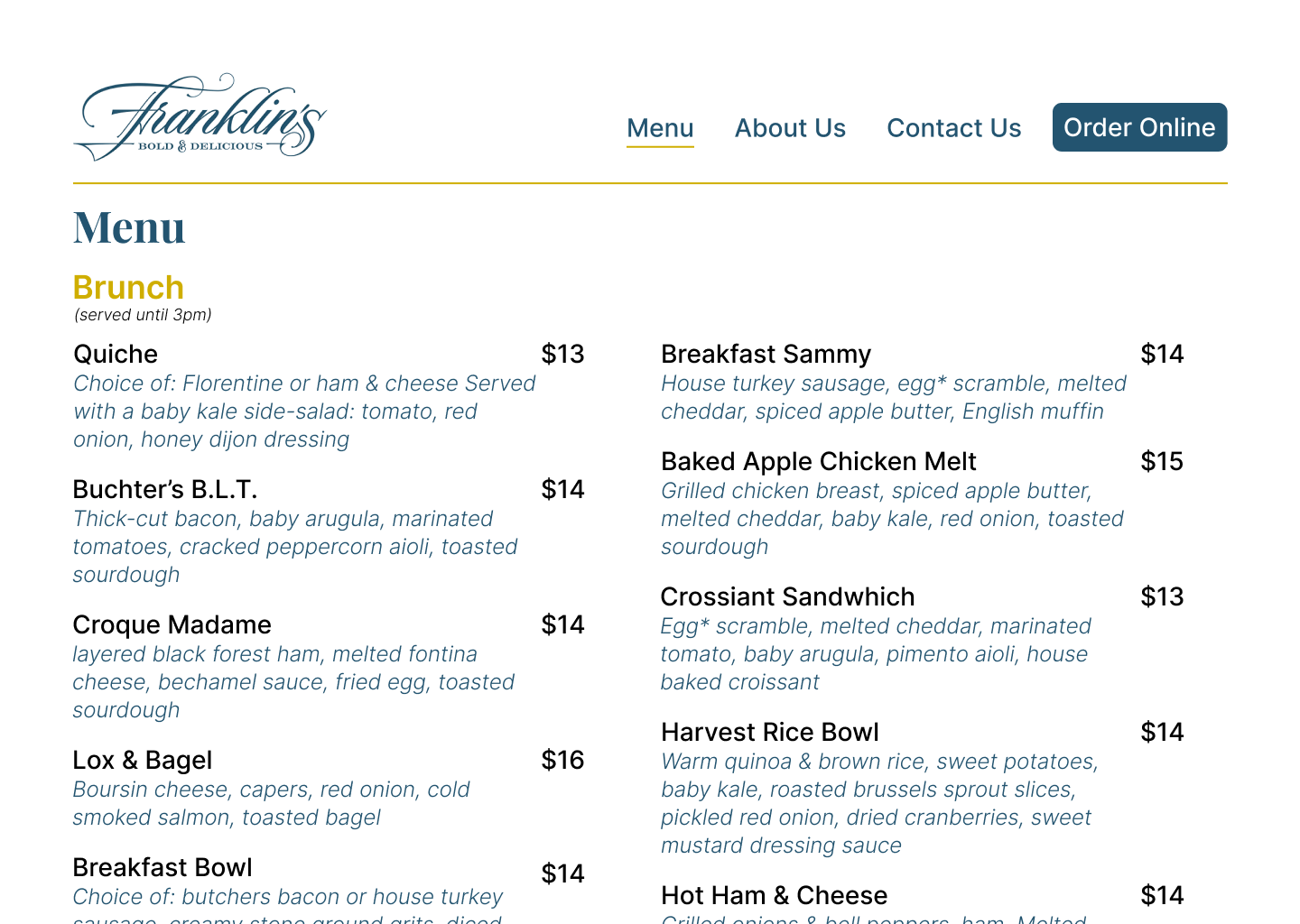
A redesigned Franklin's website and online ordering experience with task-based navigation, a restructured homepage that sets expectations before arrival, a cleaner menu page that supports decision-making, and a step-by-step order flow that reduces friction from discovery through to checkout. The redesign didn't change Franklin's identity — it made it clearer, more honest, and more welcoming upfront.
REFLECTION_
Leading a team through a full UX process from scratch — research, synthesis, IA, design, testing — taught me that the most important job of a team lead is keeping the work honest. It's easy to jump to solutions; the discipline is staying in the research long enough to find the real problem. The insight that stuck most: the experience gap at Franklin's wasn't a design problem on its own, it was an information problem. Their warmth was real — it just wasn't reaching people before they arrived. If I were to continue the project, I'd explore in-context digital touchpoints at the storefront itself that help first-timers orient without needing to ask.