Faces of Power
What does power look like up close?
What does power look like up close?
A mixed media art project exploring how leaders make decisions that impact millions. Using close-up portraiture, interviews, and layered physical materials, the work interrogates themes of privacy, intimacy, and authority.
Sole artist — concept, photography, material fabrication, and installation.
Sole artist — concept, photography, material fabrication, and installation.
Shifting focus from geopolitics to the human actors behind it.
This work extended the South China Sea piece, shifting focus from geopolitics to the human actors behind it. I was interested in what it means to hold power — and what gets hidden behind a public face.
Removing colour and context made the images feel universal — anyone could be in power.
KEY INSIGHT_
Close-up portraits and discomforting questions — the kind powerful people are rarely asked.
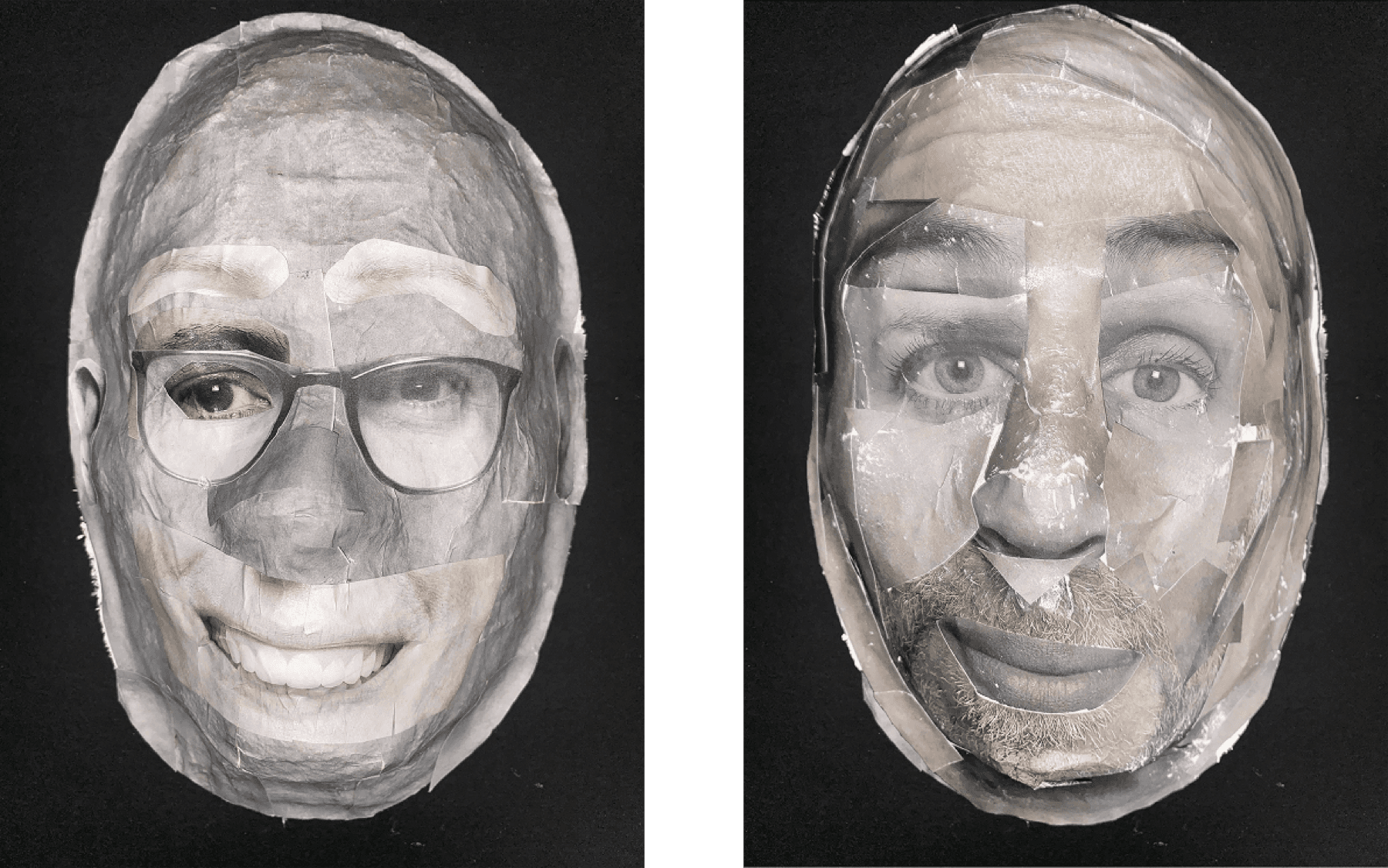
Took close-up portraits and conducted interviews asking discomforting personal questions — the kind powerful people are rarely asked publicly. Explored masks (literal and metaphorical) as a recurring motif, inspired by Brian Cattle.
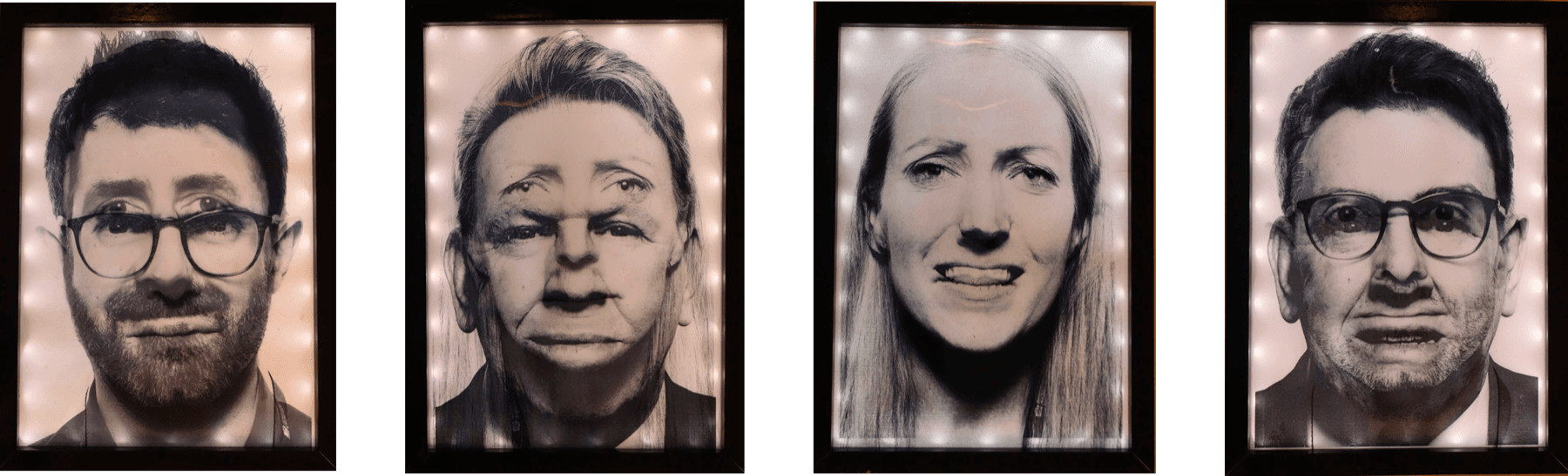
Layering identities through acetate and light — together we are one.
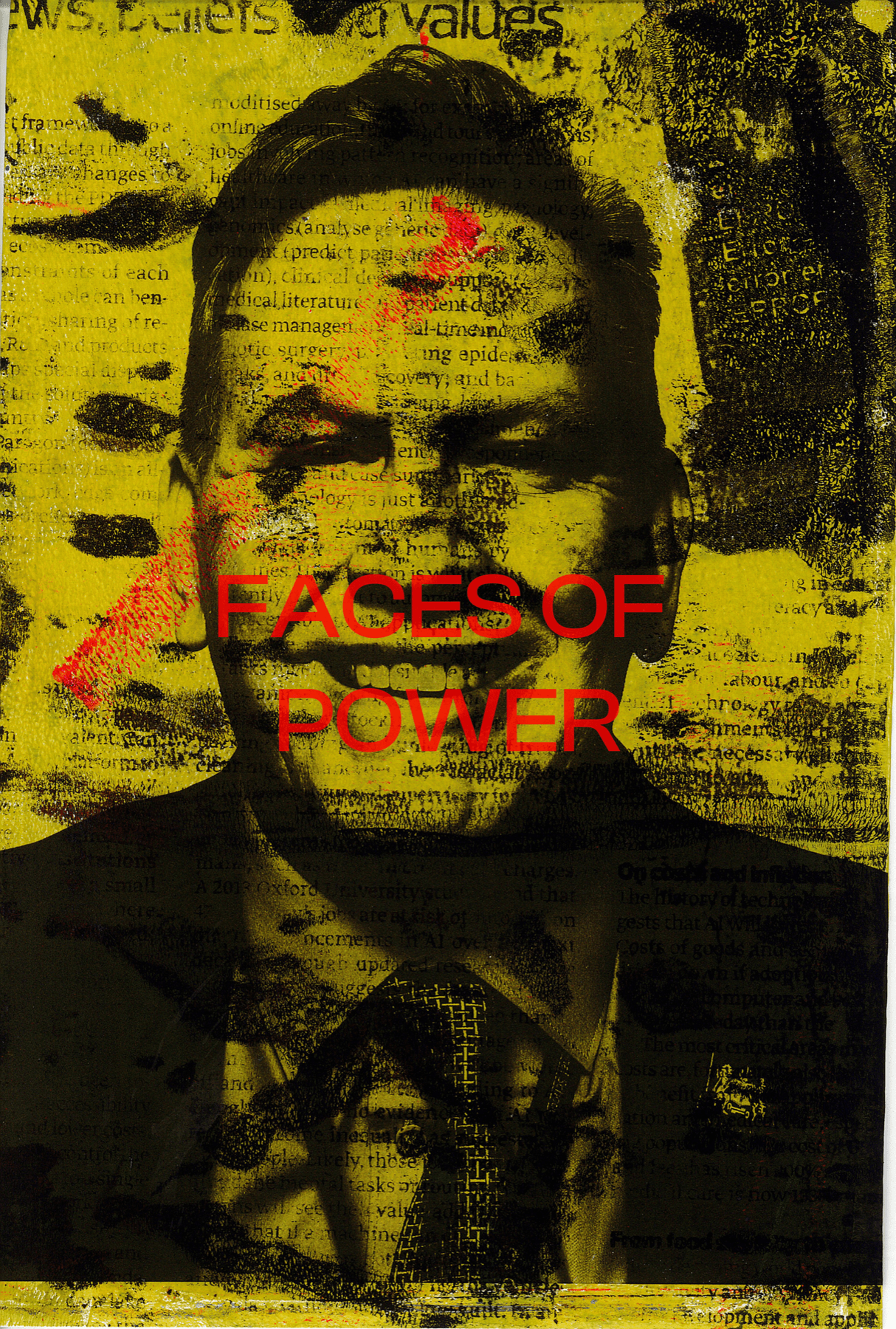
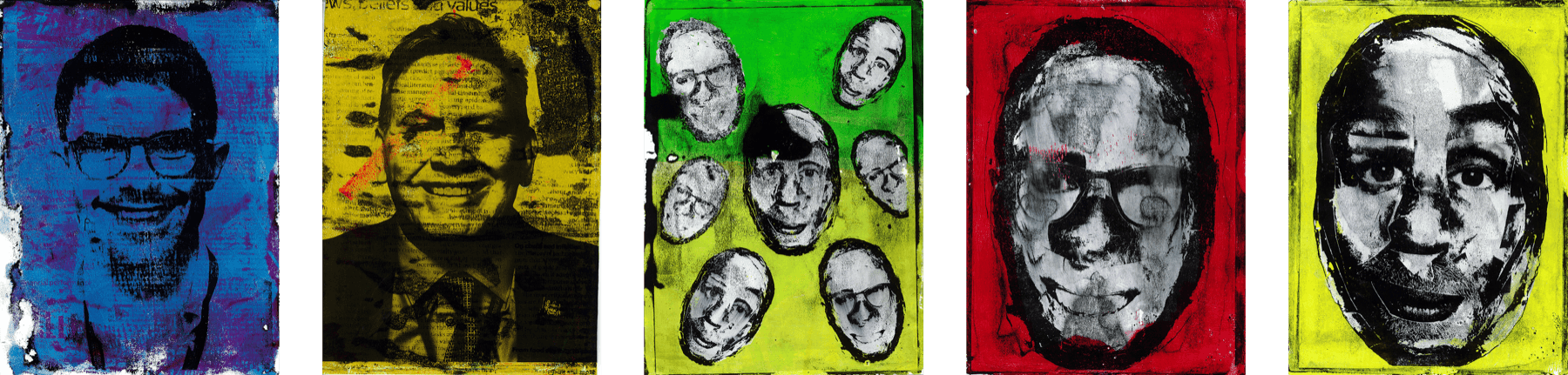
Layered multiple identities into single images using acetate and a custom-built A4 lightbox. Gelli printing added a propaganda aesthetic through paint transfer. Photograms stripped context entirely, leaving figures open to interpretation.
A multi-part installation where power is constructed, projected, and concealed.
A multi-part installation combining Mod Roc masks, acetate lightbox prints, gelli prints, and photograms — each exploring a different facet of how power is constructed, projected, and concealed.
Removing colour and context made the images feel universal — anyone could be in power.
The most powerful moment was realising that removing colour and context — the photograms — made the images feel universal: anyone could be in power. I'd push the interview component further, potentially making it part of the installation itself.